

Index
Opinion · International politics
Venezuela in Transition: Five Factors Favoring a Democratic Exit
Five dynamics — chronic illegitimacy, a brake on repression, economic infeasibility of continuity, closure of the migratory valve, and united opposition around Machado — that indicate a democratic transition remains viable.
https://conciencia-democratica.org/articulos/venezuela-en-transicion-cinco-factores-salida-democratica?lang=enBy Felipe GalliJune 6, 202613 min read
In-depth reading
Since the U.S. military operation that, on January 3, arrested Nicolás Maduro and extracted him from Venezuela, the subsequent developments have been the subject of intense debate. Donald Trump and Marco Rubio issue contradictory (and sometimes questionable) statements, which only generate greater uncertainty while the problems in Iran and their interest in Cuba seem to point (in the eyes of certain self‑described “realists”) to a continuity of the interim regime of Delcy Rodríguez (for decades one of the main hierarchs of the Chavist dictatorship), but subordinate to U.S. economic and diplomatic interests.
However, this thesis (supported in many cases by defenders of the Chavist regime or analysts who, before January 3, defended the idea that Nicolás Maduro would govern the country indefinitely) clashes with several elements that, in the opinion of the author, point to a democratic transition still being a viable outcome.
Setting aside the undeniable fact that a democratic transition is unnecessary for all actors involved (except the Venezuelan opposition and the country's own population), we must highlight the existence of five issues that, at the time, the Chavist regime leveraged in its favor to remain in power. In the absence of one, the regime compensated with another, replacing political legitimacy with repression, repression with manipulated dialogues, dialogues with economic oxygen, and economic instability with migratory escape.
However, by a confluence of factors, the Venezuelan regime today lacks those five favorable elements. We will now enumerate these factors, understanding that they are an integral part of the current Venezuelan problem that, as of today, work in favor of a democratic exit in the short or medium term.
1. Political Legitimacy
The Chavist regime came to power electorally alongside Hugo Chávez and, although there are intense debates today, it is undeniable that at the time it enjoyed overwhelming social support. A huge proportion of Venezuelans (whether a majority or not) threw themselves into the Chavist project with almost religious fanatic fervor. They therefore possessed political legitimacy. A stark contrast with the current reality.
While this is a self‑evident truth, it is worth recalling and also nuance a point: the Chavist regime already lacked legitimacy before the vast majority of the Venezuelan population at the moment of the U.S. intervention on January 3, but the illegitimacy of the interim regime of Delcy Rodríguez goes much further, as it does not have it even among the (weakened and residual) militant base of Chavism.
If we are to devote a fatalistic analysis of the Venezuelan situation to a dogmatic application of absolute realism, it is then advisable not to limit ourselves in admitting realities and to deny the prior realities: Nicolás Maduro lost the presidential election of July 28, 2024, by a margin of 37 points. Although the regime’s unpopularity was already taken as a given by many credible external monitors, there is a gap between that and an almost irrefutable picture (via records taken directly from voting machines) that shows the dictator receiving half the votes of the opposition candidate.
From there, the governing regime’s illegitimacy before the Venezuelan population becomes chronic, and its chances of regaining it are nil. Almost two years after the event, there is no doubt that the overwhelming majority of Venezuelans want political change.
For its part, the intervention forced the regime to make economic and diplomatic concessions to Donald Trump that obviously could not be denied (otherwise it would have done so). This has decimated the very discursive base of Chavism: hard‑line intransigent nationalism and repression as a justification for defending “Venezuelan national sovereignty” against “imperialist aggression.” The regime no longer possesses the legitimizing discourse that justified its very existence before the national public (referring to its convinced militants) and the international audience (the global political movements and spaces that defend Chavism).
Thus, the political illegitimacy of post‑January‑3 Chavism has entered a new stage: it not only lacks any legitimacy before Venezuelans in general, but it no longer even has it among Chavists in particular, creating a discursive dead end.
It is accepted that the fact that “the people want it” is not enough to force change. However, preserving infinitely and indefinitively in power a regime with zero public backing and social acceptance founded only on fear of repression entails other extremely high costs that, given Venezuela’s current situation, the Chavist regime is not able to bear. It was able to before January 3, but it no longer is.
2. Large‑Scale Repression
When a regime lacks legitimacy or full acceptance, it compensates with repression. If the Chavist regime imprisoned more than 2,000 people in the period after July 28, 2024, and if, from its inception in 1999 to date, it committed countless crimes against humanity, it did not do so out of mere arbitrary sadism. Every suppressed protest, execution, political prisoner and torture serves a purpose: to terrorize Venezuelans so that they prioritize immediate security and do not rebel.
With that in mind, since January 3, Venezuela has embarked on a tepid but undeniable liberalization. Hundreds of political prisoners have been released, including high‑profile figures of the opposition such as Juan Pablo Guanipa and almost the entire federal and state hierarchy of María Corina Machado’s party, Vente Venezuela. Among other things, the closure of the Helicoide (the emblematic detention centre of the dictatorship) was announced.
The opening has also seen a greater margin of maneuver for private media, which have resumed issuing critical reports on the economic and political situation. Leaders of student movements, families of political prisoners and opposition leaders have regained access to interviews on state‑controlled media. Even statements by Machado herself were broadcast via Venevisión, the first time in more than eight years that the regime tolerated her presence on national television.
Almost automatically, that liberalization was reported, and the weakened yet nourished Venezuelan civil society (after two years of total gag but with decades of prior democracy and mobilization) began to regain ground. Student movements and human‑rights groups first, and then again political parties, started a cycle of mobilizations and protests that, while tepid and weak, entail a refusal to resign by broad sectors of the population.
A large part of the social tranquility that Venezuela enjoys today depends on the goodwill of many Venezuelans who hope for a transition. If this does not materialize in the short or medium term, the possibility of a return to the violent protests and strikes that marked the 2010s is far from impossible. The portrait of Venezuelans as an “apathetic” or “passive” people that has so often populated social media recently should not be taken as a serious or realistic analysis, but as a disparagement.
The interim regime of Delcy Rodríguez cannot execute large‑scale repression, even though state outbursts and arbitrariness continue to occur. Doing so invariably would (in the short term) lead to social instability, which the regime cannot afford because that would jeopardize the fragile agreement it maintains with Donald Trump. This could not only lead to a return of direct military pressure (to which they have already shown they are unwilling to resist) but also to a renewed economic blockade that would harm the investments Venezuela so desperately needs to resolve the crisis.
3. Economic Primacy
The disinterest of Donald Trump and foreign investors in democracy, which has been cited as the basic argument of the pessimistic thesis, clashes with reality: everything that benefits them requires a political change in Venezuela. The estimated time for refining Venezuelan oil and restoring its battered industrial infrastructure suggests a return on investment of at least a decade. Given the danger that Trump’s imminent departure in January 2029 poses to the continuity of the current situation, investors need Venezuela to have a government by then that inspires minimal confidence for the business to be viable.
The problem is that all the confidence the interim regime of Delcy Rodríguez enjoys depends, ironically, on the same factor that its regime needs to stay in power: external coercion by Trump. Two decades of confrontation, arbitrary expropriations, historically record‑high corruption and poor state management nullify any legitimacy before potential investment. Nothing guarantees the oil sector that the conducive environment for investing in Venezuela will persist once Trump leaves. And while Trump may lie before departing, that will neither change the picture for them nor prevent them from seeking to influence a favorable outcome.
In parallel, Venezuela is not showing an evident improvement in its socioeconomic situation and the overall state of the country is poor. Since the average Venezuelan continues to struggle to meet basic needs, it is very unlikely that satisfaction will rise enough for them to “resign” to a continuation of Chavism. Between this, the decline in repression and the lack of political legitimacy, there is not much room (at least in the medium term) for Chavism to re‑entrench itself in power through social tolerance.
4. Migration
With political legitimacy, repression and economic improvement already ruled out as options, the regime has historically resorted to migration as an escape valve. Since the eruption of the Venezuelan crisis, more than nine million people (approximately 30 % of the national population, which alone exceeds what Edmundo González obtained in the 2024 elections) have left the country. The Venezuelan migration crisis (the largest ever to occur on the American continent) has caused social disruptions and debates across the continent, from the United States to the rest of Latin America.
Within Venezuela, the political impact has been favorable to the regime: a large portion of the initial exiles belonged to sectors of the traditional opposition base. Many of those who might have led a rebellion or instigated internal change (especially the youth) chose to leave the country amid the stalemate of political and insurgent avenues. Some analysts consider the migration crisis one of the main factors why Chavism could not be removed from power until now.
Nevertheless, Donald Trump’s intervention in Venezuela was not limited to the military. His administration has launched a broadly denounced anti‑immigration offensive, with entry bans and large‑scale deportations. Likewise, from January 3 onward, many countries have taken advantage of the “normalization” atmosphere to begin restricting the entry of Venezuelans into their territories. In short, if Chavism were to persist, Venezuelans who chose to emigrate would find it much harder to leave the country and settle legally elsewhere.
Given that migration, for many Venezuelans, is no longer an option, they will have no choice but to remain in the country and, faced with the likelihood that their conditions are driven by the Chavist regime’s desire to cling to power, act accordingly.
5. Internal Problems of the Opposition
In moments of genuine social pressure, a favorable asset for the regime lay in exploiting problems within the opposition, either fostering internal divisions between its “radical” and “dialogue‑seeking” factions (in which it took advantage of infiltrating or manipulating opposition groups), or organizing “dialogue” processes in which it negotiated very small concessions in exchange for the opposition hierarchy easing street or even international pressure. For a number of reasons, this option is no longer on the table.
Today the opposition is firmly united around María Corina Machado. The iconic leader and Nobel Peace Prize laureate galvanizes a level of adherence that no other political leader in recent years has managed to garner, not only within the opposition but in general since the death of Hugo Chávez himself. Attempts by national and foreign media to downplay her backing (“an opposition leader” or “leader of the opposition’s radical wing”) have failed, and operations aimed at restoring the media profile of discredited figures (such as Henrique Capriles or Manuel Rosales) or building alternative leadership submissive to the regime have likewise failed. Most polls continue to place Machado as the country’s most popular political leader.
In addition to public backing, a large part of the opposition party hierarchy that is the Plataforma Unitaria (though it was once at odds with Machado) has folded institutionally and politically under her leadership. Even if done in a forced or conditional manner, no sector that publicly distances itself from her can claim to gather sufficient support to become a threat, either to challenge her leadership or to benefit the regime.
One reason for this, beyond Machado’s undeniable personal appeal, is the clear discrediting suffered by any leader who today calls for any process whose short‑ or medium‑term outcome is not political change. Speaking of “dialogue,” “space‑care,” or “reconciliation” from a platform where Machado is absent is generally received coldly. This is due to the events of July 28. The evident electoral fraud, the way it was uncovered, and the subsequent actions of the Maduro regime up to its forced removal on January 3 depleted institutional mechanisms (particularly voting) and revealed the dictatorship’s total unwillingness to engage in honest dialogue. From then on, proposals of that sort are perceived as acts of servility.
Given the impossibility of weakening Machado’s leadership, the only way to ease political tension would be a dialogue in which she participates. Without her, the basic function of dialogue (to generate, at the international level, the notion of political reconciliation and, in the worst case, to delegitimize opposition leadership before its own electorate) is nonexistent. A photo of Delcy Rodríguez with Capriles, Rosales or any other leader of the so‑called “scorpions” will have no effect whatsoever.
The problem is that Machado has made clear she will not accept a negotiation that does not involve fully free presidential elections. That is, under a transparent electoral authority and with her as a candidate.
Again, we fall into the same dead end for the regime: given the abysmal economic situation and the total lack of political legitimacy, the Chavists have no chance of winning a free election against Machado, yet they cannot forever ignore her popular backing unless that entails harsh repression, which at this moment they are unable to execute, or a new migratory wave (which they are incapable of generating).
Conclusion
The five dynamics analyzed (chronic illegitimacy, the less repressive environment, the economic infeasibility of continuity, the closure of the migratory valve, and the united opposition around María Corina Machado) do not operate in isolation. They reinforce each other and create a narrow corridor of possibilities that the interim regime of Delcy Rodríguez will find difficult to navigate. In that context, maintaining the statu quo is no longer cost‑free. It demands costs that Chavism, in its current state of discursive, military and economic weakness, cannot afford to bear.
Of course, no transition is fully guaranteed. There are currently turbulences, sabotage attempts and moments of uncertainty. There are also factors (ranging from the scant democratic credentials of the great majority of major actors involved to the role of the army and the narco). However, flatly denying the direction in which events point out of a fatalistic realism is no longer true realism: it is assuming the most pessimistic stance possible and suggesting that it is.
The fact is that the democratic idea is not doomed in Venezuela. After years of Chavist tragedy, the country finds itself, perhaps for the first time in a long while, with the objective conditions to begin closing the darkest chapter of its contemporary history.
Share
For Instagram: copy the link and paste it in your story or DM.
Continue with

International politics
We Have Been Warned
Global war is closer than we think.
Bernardo Gortaire Morejón
International politics
A SOCIETY TURNED OFF BY THE LIGHT
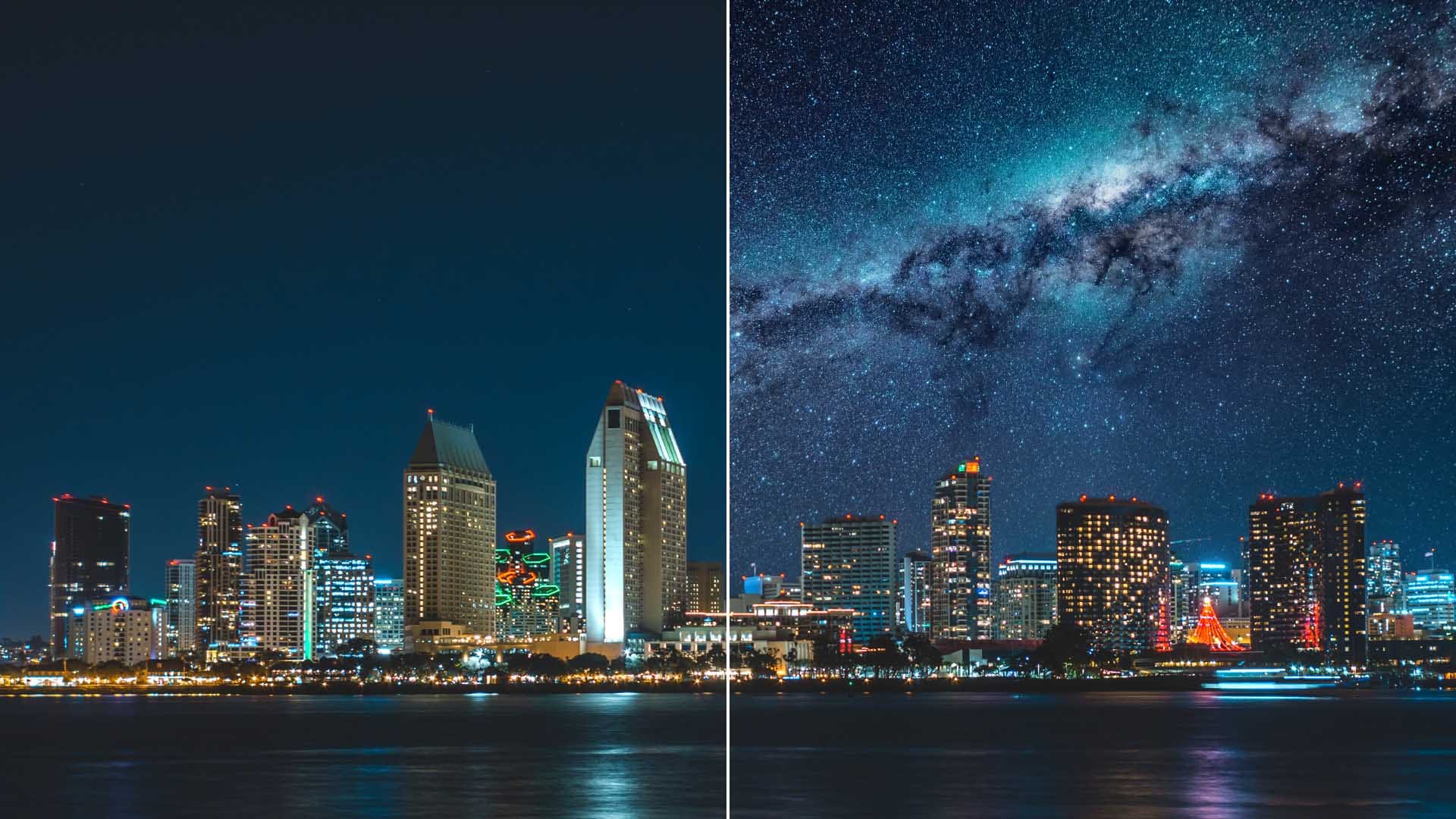
When the night disappears under the artificial glow, we don't just lose the stars: we lose sleep, biodiversity, and the ability to contemplate. An analysis of the invisible costs of light pollution.
Pedro Joaquin Villagra Delgado

International politics
«The Last Bullet for Democracy»: The Merz Government Faces State Elections
The CDU/CSU-SPD coalition under Chancellor Friedrich Merz, the most unpopular in recent history, confronts three decisive state elections in September 2026.
Lukas Effinger
Comments
No comments yet. Open the conversation.
Sign in to comment. Sign in