
Library
Readings that organize
A brief curation, organized along five editorial axes. Authors and works that give vocabulary to the journal's central questions: human dignity, liberal democracy, the republic, and the limits of power.
Eje IEditorial axis
Liberty and republic
The classical frameworks for discussing civil liberty, separation of functions and the place of republican institutions.
Author

Immanuel Kant
- Enlightenment
- Republic
- Rights
Prussian philosopher (1724–1804). One of the roots of modern republican and rights-based thought. His political programme —autonomy, dignity, peace as a task— still orders contemporary democratic conversation.
View on Wikipedia →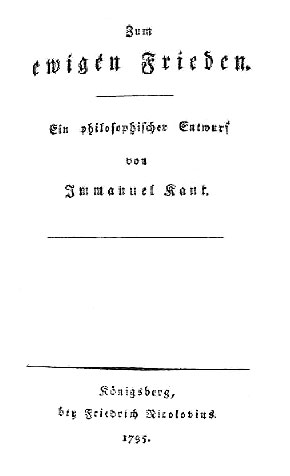
1795
Perpetual Peace
The most famous sketch of an international order founded on republics and cosmopolitan law. Peace, Kant argues, is not established by inertia: it is built as a political and moral task.

1784
What is Enlightenment?
“Dare to think.” The brief essay that captured, better than any other, the modern call to intellectual autonomy against every tutelage. Essential reading for any serious discussion of freedom of conscience.
Author

Alexis de Tocqueville
- Liberal democracy
- Civic culture
- Republic
French thinker (1805–1859). His analysis of American democracy opened much of the modern vocabulary on civic equality, soft despotism and associational life.
View on Wikipedia →
1835–1840
Democracy in America
An early and acute observation of the internal risks of modern democracies: the conformism of opinion, administrative tutelage and the weakening of intermediary bodies.
Author

Norberto Bobbio
- Liberal democracy
- Rule of law
- Rights
Italian philosopher of law and politics (1909–2004). Defender of procedural democracy and rights. His work is one of the clearest syntheses of post-war democratic liberalism.
View on Wikipedia →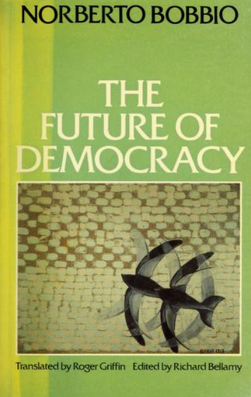
1984
The Future of Democracy
On the unfulfilled promises of modern democracy: invisible powers, the persistence of privilege, technocracy. Not to abandon the project, but to understand it at its real scale.
1994
Left and Right
A brief, honest essay on why the distinction remains useful —when it is and when it becomes sterile— and on the place of equality as a criterion.
Author

Raymond Aron
- Liberal democracy
- Totalitarianism
- Pluralism
French sociologist and political scientist (1905–1983). A tireless reader of Tocqueville and Weber. Defender of a sober view of political regimes, far from ideological enthusiasm.
View on Wikipedia →
1965
Democracy and Totalitarianism
A classic course that distinguishes —with a care we are little used to— constitutional democracies and one-party regimes. Indispensable for comparative discussion.
1938
Introduction to the Philosophy of History
Aron's doctoral thesis, in which he lays the epistemological foundations of all his later work: the limits of historical knowledge, the plurality of interpretations and the intellectual's responsibility before the judgment of time.
Author

Isaiah Berlin
- Liberty
- Pluralism
- Humanism
Philosopher and historian of ideas (1909–1997). He reopened the post-war debate on liberty and showed —with rare care— why legitimate values can enter irreducible conflict with one another.
View on Wikipedia →1958
Two Concepts of Liberty
The distinction between negative liberty —freedom from interference— and positive liberty —being the effective master of one's own decisions. A brief and still central lecture for discussing the contemporary meaning of the liberal project.
Author

Michael Walzer
- Pluralism
- Equality before the law
- Common good
American political philosopher (1935). He thought of justice as plural spheres and rigorously revisited the theory of just war and the place of cultural pluralism.
View on Wikipedia →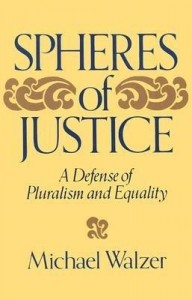
1983
Spheres of Justice
Why equality is not measured by a single good, but by many —money, education, recognition, health— each with its own logic. An indispensable map for discussing equality without reductionism.
Author

Charles Taylor
- Pluralism
- Modern identity
- Civic culture
Canadian philosopher (1931). A central reading for thinking modern identity, democratic secularism and the possibility of a shared public life among plural communities.
View on Wikipedia →
1991
The Ethics of Authenticity
A brief essay on the risks —and possibilities— of the modern culture of the individual. Critical of relativism, but also of conservative moralism.
Author

Henry David Thoreau
- Civil disobedience
- Moral conscience
- Liberty
American philosopher (1817–1862), thinker of civil disobedience and of the moral conscience against the State. His brief essay gave its name to a century of non-violent resistance and still runs through the contemporary vocabulary on conscientious objection.
View on Wikipedia →1849
On the Duty of Civil Disobedience
Why the conscience's ultimate loyalty is not to the State but to moral judgment. A brief text that inspired figures from Gandhi to Martin Luther King and that still feeds the contemporary vocabulary on conscientious objection.
Eje IIEditorial axis
Authoritarianism and totalitarianism
Readings that help recognize the conditions by which a society can yield to fear, to the single answer or to democratic backsliding.
Author

Hannah Arendt
- Totalitarianism
- Liberty
- Democratic conscience
German political philosopher (1906–1975). She thought of freedom as a public capacity and warned about the conditions that make totalitarian regimes and the banality of evil possible.
View on Wikipedia →
1951
The Origins of Totalitarianism
How antisemitism, imperialism and social atomization made the totalitarian regimes of the twentieth century possible. A question that remains ours: what conditions allow a society to yield to fear.
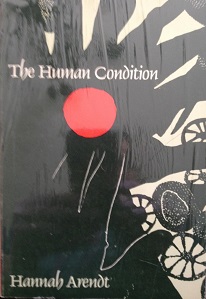
1958
The Human Condition
Classic distinction between labour, work and action. Politics is not the administration of things: it is the space in which people appear before one another and begin something new.
Author
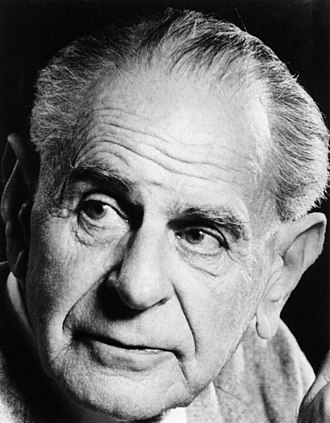
Karl Popper
- Open society
- Critique of authoritarianism
- Pluralism
Philosopher of science and politics (1902–1994). An early and consistent defender of the open society against the temptation of a single answer. His critique of historicism left its mark on much of twentieth-century democratic liberalism.
View on Wikipedia →
1945
The Open Society and Its Enemies
A critique of the traditions —Plato, Hegel, Marx— that promise a definitive political truth. Freedom, Popper argues, depends on the willingness to correct oneself together. Still essential reading against any authoritarian temptation.
Author

Steven Levitsky y Daniel Ziblatt
- Critique of authoritarianism
- Institutions
- Liberal democracy
American political scientists at Harvard. They study comparatively how contemporary democracies erode without the need for classical coups: the role of unwritten norms, the partisan capture of institutions and extreme polarization.
View on Wikipedia →
2018
How Democracies Die
An already-classic piece of contemporary democratic analysis. Why most present-day democracies do not fall by tanks but by elected rulers who erode, step by step, the norms that sustain fair play.
2023
Tyranny of the Minority
A natural continuation of the previous book. How institutions designed to limit power can, under certain conditions, shield a political minority from majority will. A warning about the limits of constitutional design.
Author

Timothy Snyder
- Critique of authoritarianism
- Political history
- Democratic conscience
American historian (1969), professor at Yale. He studies twentieth-century Central and Eastern Europe and writes on contemporary democratic backsliding.
View on Wikipedia →
2017
On Tyranny: Twenty Lessons from the Twentieth Century
A brief manual on how democracies erode —from within— and what an ordinary citizenry can do to resist. Concise and useful far beyond the country that prompted it.
Eje IIIEditorial axis
Humanism and dignity
The person as an end in themselves, the moral limit to all violence and freedom as effective capacity for a fulfilled life.
Author

Jacques Maritain
- Humanism
- Human dignity
- Rights
French philosopher (1882–1973). One of the principal voices of twentieth-century personalist humanism. He had a decisive influence on the drafting of the Universal Declaration of Human Rights.
View on Wikipedia →1936
Integral Humanism
A programme of thought that places the person at the centre of political life without renouncing the communal dimension. Foundational reading for understanding contemporary democratic humanism.
Author

Albert Camus
- Moral conscience
- Humanism
- Critique of authoritarianism
French essayist and novelist (1913–1960). Lucid in the face of the totalitarian temptations of the twentieth century —of one sign and the other— and a sober defender of moral rebellion against absurdity and violence.
View on Wikipedia →
1951
The Rebel
Why rebellion against injustice never authorizes political crime. A text uncomfortable for every maximalism.

1942
The Stranger
The novel that crystallized Camus's notion of the absurd and which, without being a text of political philosophy, ordered the reader's moral conscience like few others before a world without automatic transcendence.
Author

Amartya Sen
- Human dignity
- Liberty
- Common good
Indian economist and philosopher (1933), Nobel Prize in Economics 1998. He rethought development as the expansion of effective capabilities, articulating political freedom and fulfilled life.
View on Wikipedia →
1999
Development as Freedom
Why political freedom, education and health are not luxuries of development: they are its form. A clear and demanding reading for discussing the place of the State and of rights.
Eje IVEditorial axis
Democracy and deliberation
How contemporary democracy is sustained, represented and debated —its promises, its tensions and its setbacks.
Author

Jürgen Habermas
- Deliberation
- Public sphere
- Liberal democracy
German philosopher and sociologist (1929). His theory of communicative action and the public sphere is one of the most used tools for discussing democratic deliberation and legitimacy.
View on Wikipedia →
1962
The Structural Transformation of the Public Sphere
A reconstruction of the emergence of a bourgeois public sphere between the eighteenth and nineteenth centuries and of its later transformation. An obligatory starting point for thinking the press, deliberation and democracy.
1981
The Theory of Communicative Action
Habermas's major work. A theory of rational understanding as the core of social and democratic life: two volumes that articulate philosophy of language, sociology and political theory to ground deliberative democracy.
Author

John Rawls
- Equality before the law
- Pluralism
- Liberal democracy
American philosopher (1921–2002). He reformulated the central questions of contemporary political philosophy: what makes the institutions of a free society just.
View on Wikipedia →
1971
A Theory of Justice
The two principles of justice, the original position, the veil of ignorance. A conceptual architecture that articulated contemporary egalitarian liberalism and still orders the debate.

1993
Political Liberalism
How a free society can be sustained when its citizens hold reasonable but incompatible moral and religious doctrines. One of the great questions of pluralism.
Author
Adam Przeworski
- Liberal democracy
- Institutions
- Critique of authoritarianism
Polish-American political scientist (1940). One of the most rigorous voices in the empirical study of democracies: why they are born, how they are sustained and what makes them recede.
View on Wikipedia →2019
Crises of Democracy
A long-range look at the symptoms of democratic backsliding in the West. Democracies do not always fall by coups: sometimes they empty out slowly, while one watches.
Author

Pierre Rosanvallon
- Liberal democracy
- Representation
- Democratic conscience
French historian and political scientist (1948). He studies the contemporary transformations of representation, legitimacy and democratic distrust.
View on Wikipedia →2006
Counter-Democracy
How other forms of citizen action —oversight, denunciation, judgment— coexist with the vote, and can either correct electoral democracy or, ill used, weaken it.
Author

Anthony Giddens
- Modernity
- Reflexivity
- Globalization
British sociologist (1938), former director of the London School of Economics. He thought of late modernity as a horizon of risk, self-organization and growing reflexivity —and, with it, the challenges that globalization poses to contemporary democracies.
View on Wikipedia →1990
The Consequences of Modernity
On the institutions that produced a world simultaneously freer and more exposed to risk —the nation-state, the global market, science. A key piece for thinking globalization carefully.
1991
Modernity and Self-Identity
How personal identity becomes a reflexive project in societies where traditional certainties dissolve. Useful reading for discussing the link between intimate life, freedom and civic bond.
Author
Carlo Galli
- Liberal democracy
- Sovereignty
- Critique of populism
Italian political philosopher (1950–), professor at the University of Bologna. A critic of the “fluidity” of power in contemporary democracy and author of works on sovereignty, political space and a critique of post-Fordist liberalism.
View on Wikipedia →2011
The Malaise of Democracy
Why contemporary democracy feels, simultaneously, the pull of populism and the exhaustion of its representative institutions. An Italian reading of the tensions of the democratic project in the twenty-first century.
Author

Gherardo Colombo
- Rule of law
- Democratic conscience
- Institutions
Italian judge and jurist (1946–), known for the “Mani Pulite” investigations into political corruption. A writer of democratic outreach and a critic of the culture of impunity: one of the most level-headed Italian voices defending the common sense of the rule of law.
View on Wikipedia →2011
Democracy
An elementary and serene defence of democracy as a form of common life, written from the experience of a judge who saw the corruption of institutions up close. A reading at once accessible and demanding.
Eje VEditorial axis
International order and democracy
How rule-based international orders, grounded in liberal democracies, are built, sustained and eroded. Essential reading for understanding the place of democracy in world politics.
Author

G. John Ikenberry
- International order
- Liberal democracy
- Institutions
American political scientist (1954), professor at Princeton. One of the central voices of contemporary liberal internationalism: how rule-based international orders, grounded in institutions and liberal democracies, are built, sustained and eroded.
View on Wikipedia →2001
After Victory
How the victorious powers of major wars build —or fail to build— international orders that bind them to themselves through institutions. A key reading for discussing the post-war international architecture and its current crisis.
2011
Liberal Leviathan
The liberal international order as a paradoxical Leviathan: hegemonic and at the same time bound by the rules it itself created. A foundational piece for understanding the promise and limits of liberal internationalism.
2020
A World Safe for Democracy
A long history of liberal internationalism as a political project. Why liberal democracies have, time and again, needed an international order to protect them from one another, and why that order is once again under contest.
Author

Robert Keohane y Joseph Nye
- International order
- Interdependence
- Soft power
American political scientists, leading figures of the liberal theory of international relations. They rethought power, cooperation and interdependence among States in a world more complex than the mere logic of force.
View on Wikipedia →1977
Power and Interdependence
The book that reformulated the conversation on power in international relations: no longer mere military coercion, but a web of economic, institutional and social interdependencies that also constrain and orient States.
2004
Soft Power
Joseph Nye explains why a country's ability to make itself attractive —its culture, its democratic ideals, its institutions— is a form of power as real as its military capacity. A conceptual tool now under contest.
Eje VIEditorial axis
Argentine and River Plate tradition
Local voices that bring historical, institutional and cultural body to democratic thought in the River Plate.
Author
Natalio Botana
- Republic
- River Plate tradition
- Institutions
Argentine historian and political scientist (1937). One of the most serious voices of contemporary republican thought in the River Plate. A precise reader of Tocqueville, Sarmiento and Alberdi.
View on Wikipedia →1977
El orden conservador
The institutional construction of the Argentine regime between 1880 and 1916: how a political order was forged with legal foundations and, at the same time, with a limited horizon of citizenship. A classic piece for understanding how politics is thought in the country.
1984
La tradición republicana
A journey through Alberdi, Echeverría and Sarmiento as thinkers of an Argentine republic under construction. Useful for discussing, today, what is inherited and what is rewritten from that tradition.
Author
Daniel Muchnik
- Critique of authoritarianism
- Political history
- River Plate tradition
Argentine journalist and essayist (1934–2022). A chronicler of politics, economics and democratic backsliding in the twentieth century and the beginning of the twenty-first. A River-Plate voice for discussing barbarism without giving up democratic hope.
View on Wikipedia →2014
La humanidad frente a la barbarie: reflexiones sobre la guerra, la muerte y la supervivencia
A series of reflections on the civilizational regressions of the twentieth and twenty-first centuries —totalitarianisms, genocides, war as horizon— and on what modern societies can still learn from those experiences in order not to repeat them.
Author
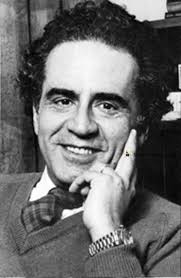
Guillermo O'Donnell
- Democratization
- Accountability
- River Plate tradition
Argentine political scientist (1936–2011). One of the most rigorous voices on democratic transitions, horizontal accountability and delegative democracy. His work defined much of the contemporary vocabulary on democratization.
View on Wikipedia →1973
Modernization and Bureaucratic-Authoritarianism
The classic analysis of the emergence of “bureaucratic” authoritarian regimes in Latin America as a response to the contradictions of dependent development. It established the conceptual framework for understanding Southern Cone authoritarianism.
1999
Counterpoints
A collection that brings together the central essays on delegative democracy, horizontal accountability and the limits of the polyarchic model for Latin America.
2010
Democracy, Agency, and the State
The most mature elaboration of O'Donnell's theoretical project: thinking democracy from the effectiveness of the State and the capacity for citizen agency, not only from the formal rules of the regime.
This library grows with the publication. contact.
Explore the journal