

Index
Política institucional
The Autonomous State: The Unwanted Child of the Spanish Transition
The three original sins of Spain's autonomous state system: a generalised autonomy without coherent design, juridically weak self-government, and a financing model tethered to centralist inertias.
https://conciencia-democratica.org/articulos/estado-autonomico-hijo-no-deseado-transicion?lang=enBy Victor José Almenar ZamoraJune 6, 202610 min read
In-depth reading
"I stood in the middle. The others spun in a circle and I was the centre. The circle now breaks, the peoples now become States, and here, empty, spinning alone, I remain. Each one wants to be every one; I shall be no less: Madrid — one, free, round, autonomous, whole!"
— Anthem of the Community of Madrid.
The President of the Community of Madrid declared, in that 12 October ceremony, that "Madrid was Spain within Spain". The phrase may sound innocuous to those Spaniards who have never seen in the construction of national Spain any greater dilemma than that posed by those "revolutionaries" or "coup plotters" who, driven by their egos, would not have known how to recognise themselves in the national emblem of Castilian Spain. But the phrase is not innocuous: it is clumsy and unfinished, like the construction of the Spanish autonomous state itself and everything that flows from it.
Attending to the lyrics of the anthem of the Community of Madrid serves as a highly illustrative historiographic example of the sense of incomprehension that the old administrative bodies of capital-city Madrid experienced before a power that was fragmenting and reorganising around them. Provinces ceased to be provinces, governors became presidents, and Madrid trembled at the fear of losing its dominance to a "non-dependent" Catalonia. The reaction was concrete: the constitution of the Community of Madrid, devoid of any historical criterion to serve as an excuse, as such criteria would later serve the rest of the regions. Here appears one of the first original sins of our indefinable autonomous state (Romero, 2012).
The Three Original Sins of the Autonomous State
When one speaks of the construction of the autonomous communities in Spain, one often risks overlooking both the context of their birth and the motivations that led the architects of the Transition to shape a decentralised state system. Without entering into the historical causes or the failures of the nineteenth century, Spain in 1975 stood at the same point at which it had been left by the Second Republic: thirty-nine years of dictatorship had not served to placate or dampen peripheral sentiments. On the contrary, in many cases they had spurred those identities to categorise themselves as the true counterweights of opposition to the regime while it lasted. In that context, the choice was clear: state recognition of the right to self-government of the historic regions, even before a new constitutional pact was in place.
With the approval of the 1978 Constitution, the right to autonomy was recognised through two distinct paths, with the clear intention of constitutionalising in the new pact the dilemmas of national Spain. History, however, did not match that forecast. The first sin of the autonomous system then appeared: the Constitution recognises the right, but does not grant it to those who do not demand it. It was a legal trap born of the assumption that autonomy would only be claimed by the historic regions. The opposite occurred: the autonomous construction accelerated, ceased to be controllable from Madrid's ministerial offices and, once the Catalan and Basque autonomies were in place, the remaining regions raced in pursuit of the same right, forcing the actors of the Transition to adapt to a system that had taken on a life of its own. The solutions were, to a large extent, patchwork: the creation of autonomies that did not respond to historical, regionalist or nationalist criteria ended up blurring the primary motive of the right to autonomy.
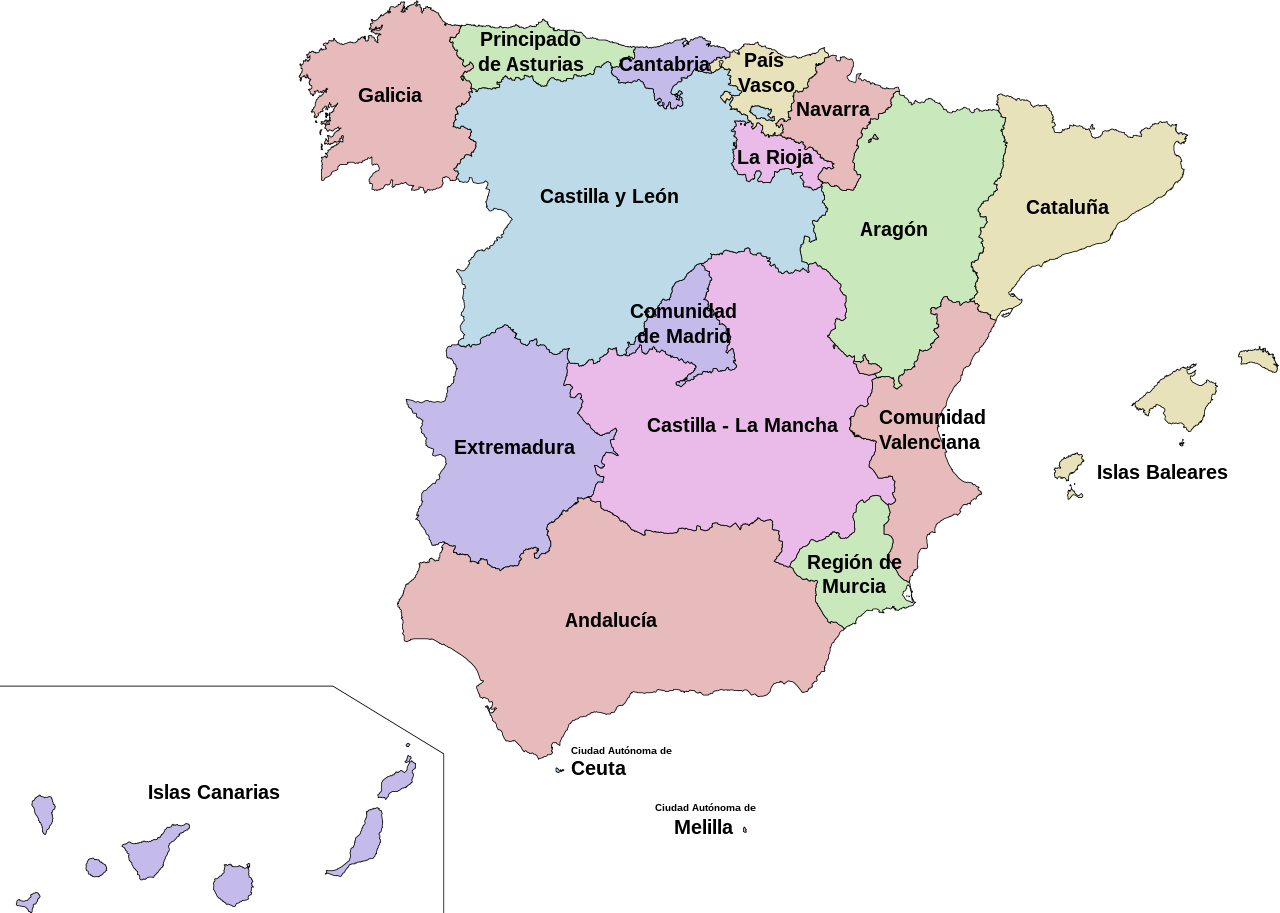
Another fundamental aspect of the autonomous process concerns its juridical dimension — that is, the way in which autonomous administrations are structured through their statutes of autonomy. The basic elemental norm of any autonomy is not a source of law in its own right and, without entering into theoretical distinctions with federal states, consists purely of an organic law. The nature of the statutes of autonomy thus configures a balance of powers favourable to the state powers, centralises competence-related decisions in the hands of the parliamentary majority and, in the long run, has transformed the autonomous question into a political matter that overflows the state's configuration. This heightens the verticality of the system and the capacity of regional and peripheral nationalist parties to condition state agendas.
Within that same original sin one must place the asymmetric construction of the Spanish state legislature. The absence of a chamber with real power dedicated to the regional question and endowed with effective attributions inevitably triggers a shift in the objectives of parties seeking to influence the sub-state configuration. They end up turning towards the Lower House, drastically increasing their influence by becoming indispensable in the construction of investiture, legislative and budgetary majorities. Likewise, the Senate's incapacity to channel autonomous demands is also a sign of the first point noted above: the autonomous state was not conceived with a Spain such as today's in mind.
Finally, the third relevant aspect of the autonomous construction concerns the model for financing the autonomies. It is born from an unequal constitutional position, marked by the fiscal privileges of the Basque-Navarrese model, but is accentuated by the implementation of the ordinary financing regime. The method of calculation used set out from the items the State had previously executed over the old provinces, vitiating the new system on the basis of a centralist scheme and, in this way, hindering the autonomous development of policies in those new autonomous regions that found themselves less favoured by the budgetary distribution.
Public Policies in a Complex State
The conclusion of the analysis of the general aspects of the autonomous state lays bare the complexity of the Spanish state. It is a system characterised by a foundational contradiction: it thinks in centralist terms when it comes to foreseeing strategic public policies, yet coexists with an enormous degree of political and administrative decentralisation, without effective constitutional channels to handle the conflict that springs from that very structure. This contradiction encourages the deviation of the political focus toward the politicisation of the autonomous system, contaminating other state agendas through the predominance of Congress (Romero, 2011).
Starting from these conclusions, it is clear that public policies require a high degree of coordination between the different levels of government, both vertically and horizontally between the various autonomies (Romero, 2011; Romero, 2019). However, the structure of the system imposes a rule over which no power presides: the capacity for coordination must arise from the political will of the actors that configure it. It is here that the polarisation of the Spanish system has shown its greatest deficiencies, turning the autonomies into spaces of political struggle within national politics.
When analysing conflicts such as territorial planning, the fight against climate change, adaptation to its effects, or other areas of action from the perspective of public policies, any effective design over a politicised problem requires balance among a triangle of actors (Kingdon, 1995). In the Spanish case, that triangle is magnified, because the different administrations come to be transformed into groups of support or rejection. As has been noted, coordination requires political will; however, the permeability of the autonomous system with the state's political system has produced two fundamental effects: first, the divergence of agendas between autonomies and between the State and the autonomies; second, as a consequence, the political conception of the agenda as a public policy in itself, so long as it serves to distinguish one from the opposing administration.
Another point to highlight in the design of public policies concerns risk and political time. When one speaks of climate-change mitigation and adaptation policies, these tend to imply abrupt changes in the consumption model and in the economic system, large state investments and measures capable of generating social friction and counter-reactions. In the Spanish system a regularity tends to appear: the risk of confronting the application of unpopular policies, demanded nonetheless by other segments of society, finds political dividend through the system's complexity. In that situation, the competent administrations exchange accusations of incompetence with one another.
Between Reform and the Will to Reform
Posing a solution to the complexity of government in Spain often arises from the conception of the current State as a path dependency, whereby decisions agreed in the past condition and limit the effectiveness of present decisions. However, conceiving the problem only as a burden of the past breaks with other dimensions that must be considered when crafting a response to the current puzzle. While the purely juridical apparatus of the State cannot be ignored, it is also necessary to consider its political and sociological dimensions.
In constitutional and state-architecture terms, the transformation of the Senate into an organ of genuine territorial discussion endowed with effective powers stands out as the first option to consider. But it is also the most costly option in terms of political time, since it requires majorities and political wills difficult to assemble — once again displacing the focus toward the other dimensions of the problem.
One of the main problems of the Spanish political system is the consideration given to peripheral parties: accepted within the system but not always recognised as legitimate parts of it. The foundational contradiction reappears. For that reason, these parties should not be understood as independent of the general will, but as a symptom of the political reality of the State. This would help to shift the core of parliamentary debates from the ontology of those parties towards the acceptance and discussion of their demands within the system itself.
The final dimension is the sociological one — that which pertains to the perceptions of citizens, generally disconnected from the operational realities of the system, such as the distribution of competences. Even though it is a complex structure, it would suffice to consider the system as a whole, in which it is understood that autonomous and state decisions need to complement one another at the opposite level to achieve greater effectiveness.
Conclusion
The analysis of the Spanish autonomous state makes plain that its main dysfunctions do not derive from decentralisation or from the formal recognition of territorial diversity, but from the way in which the system was conceived and developed. The state of the autonomies emerged as a contingent political solution, without an institutional design fully oriented to governing a complex reality. From there spring its unfinished character and the tensions that have run through it since its origin.
The so-called "original sins" of the system — the unforeseen generalisation of the right to autonomy, the juridical weakness of self-government and a financing model conditioned by centralist inertias — have generated a path dependence that limits the capacity for reform and consolidates a hybrid system: highly decentralised administratively, yet centralist in its political and strategic conception. This contradiction is transferred directly to the realm of public policy.
In matters such as territorial planning or the struggle and adaptation to climate change, the complexity of the problem demands a multilevel governance based on coordination and cooperation between administrations. However, the autonomous state lacks effective institutional channels to handle the conflict inherent to these policies, delegating its resolution to the political will of the actors. In a context of polarisation, this dependence translates into blockage, cross-accusations of responsibility and the use of the public agenda as an instrument of confrontation.
The absence of a territorial chamber with real decision-making capacity and the centrality of Congress reinforce these dynamics, displacing territorial conflict to the core of the political system and contaminating other strategic agendas. To this is added the difficulty of assuming the political costs associated with structural long-term policies, which incentivises inaction and the evasion of responsibilities.
Ultimately, the problem of the autonomous state is not solely juridical, but political and cultural. Beyond the necessary institutional reforms, the future of the system depends on assuming its own complexity and on developing a culture of cooperation that allows territorial conflict to be governed as a structural reality, and not as a contingent anomaly.
References
- Kingdon, J. W. (1995). Agendas, Alternatives, and Public Policies.
- Romero, J. (2011). El gobierno del territorio en España.
- Romero, J. (2012). España inacabada. Organización territorial del Estado, autonomía política y reconocimiento de la diversidad nacional.
- Romero, J. (2019). Gobernanza territorial, coordinación multinivel y políticas públicas.
Share
For Instagram: copy the link and paste it in your story or DM.
Continue with

International politics
We Have Been Warned
Global war is closer than we think.
Bernardo Gortaire Morejón

International politics
A SOCIETY TURNED OFF BY THE LIGHT
When the night disappears under the artificial glow, we don't just lose the stars: we lose sleep, biodiversity, and the ability to contemplate. An analysis of the invisible costs of light pollution.
Pedro Joaquin Villagra Delgado

International politics
«The Last Bullet for Democracy»: The Merz Government Faces State Elections
The CDU/CSU-SPD coalition under Chancellor Friedrich Merz, the most unpopular in recent history, confronts three decisive state elections in September 2026.
Lukas Effinger
Comments
No comments yet. Open the conversation.
Sign in to comment. Sign in