

Index
International politics
Goodbye Lenin or Hello Putin?
The 176 measures announced by Havana are the latest economic opening without political reform. The question is not whether Cuba will become capitalist, but whether it will mutate into an oligarchic authoritarianism like Russia or Belarus.
https://conciencia-democratica.org/articulos/goodbye-lenin-o-hello-putin?lang=enBy Ernesto SardiñasJune 27, 20269 min read
In recent days, grandiloquent headlines have flooded the newspapers of half the world regarding the 176 measures approved by the power elite of the Cuban dictatorship. Cuba approves sweeping market reforms, Cuba opens up to capitalism are some of the headlines predicting the end of the Stalinist model of the Communist Party. In light of these announcements, many have already declared the Cuban regime dead and expect Cuba to become a liberal democracy with a free market in a short time.
Against such conclusions from many foreigners and some Cubans, I would like to add some context to the announced changes, to better understand what is happening with the largest of the Antilles and what might lie ahead.
Previous waves: a history of openings that changed nothing
We must remember that this is not the first time Cuba has "opened" its economy and allowed new activities in the private sector with the participation of entities from other countries. After the fall of the communist bloc in Eastern Europe, in a context where Cuba lost much of its export and import markets and a third of its GDP, the Castroist elite allowed the development of the tourism sector, with the participation of foreign companies, as well as a certain list of cuentapropistas focused on the service sector and of limited scope, such as cafés and souvenir stands in tourist areas of the country. Many of the measures proposed in that wave of reforms were later reversed or implemented in a far more conservative manner than originally envisaged.
In the 2010s came the Lineamientos de la Política Económica y Social del Partido y la Revolución. Among many other things, the role of the cuentapropista was expanded, more areas were opened to foreign investment, non-agricultural cooperatives were legalized as a form of economic management in sectors such as transport, and—after 60 years—the buying and selling of cars and housing between individuals was permitted, albeit not on a commercial scale. This process culminated in the thawing of the Obama administration, which saw in engagement the appropriate approach to finally put an end to Cuban totalitarianism: they naively believed that greater openness and stronger economic ties would lead to political reform. As we know, repression and the illegal nature of dissent remained. The only changes that, counterproductively for the regime, empowered civil society were the widespread availability of the internet and the easing of travel abroad with the 2013 Migration Law.
With the arrival of the pandemic and the Trump administration, the Cuban economic model—based on tourism and the export of medical services under conditions of labor slavery—entered into crisis. Facing chronic shortages of hard currency, dollar stores were opened for certain products such as refrigerators, electric scooters, and air conditioners, effectively creating an economic apartheid between those with relatives or friends abroad and those without. This disparity would only grow with the successive opening of dollar stores for an ever-wider range of products and the closure of those billing in Cuban pesos in the following years.
In January 2021, the Cuban regime launched a monetary reform, devaluing the national currency, raising salaries and prices in the public sector (even more hegemonic than today) to eliminate the second currency then in circulation: the Peso Convertible or CUC. This led to an inflationary spiral that exacerbated general discontent. Given the acute shortages of food, medicine, and supplies, along with the crumbling infrastructure providing basic services to the population—by the summer of 2021, blackouts had become a routine part of Cubans’ days—the situation culminated in the most acute social outburst in the history of the Cuban Revolution on July 11, 2021. After repressing the protests and opening airports as pressure valves for discontent, the regime launched the next wave of "reforms." This time, it legalized private enterprises or MIPYMES. For the first time since 1968, Cubans could own businesses with up to 100 employees in sectors defined by the new legal framework. This reform became a way to launder the capital of many Castroist cronies and to circumvent U.S. sanctions. Inequality in the workers’ paradise grew once more. Curiously, after the protests, restrictions on the importation of food and medicine were also lifted, once again demonstrating the hypocrisy of the official narrative of the "U.S. blockade".
All of the above changes occurred without touching the political structure. They have mostly benefited the Castroist elite and a very small group of Cubans—as long as they are not dissenters and, therefore, do not pose an inconvenience to the regime—provided they have someone abroad who can supply them with enough dollars to fit into the new economic model.
The 2026 trigger: the end of Venezuelan subsidies
Despite all of the above, the dictatorship was still standing at the beginning of 2026, with a growing number of political prisoners and anniversaries. Conditions began to take shape for a new cycle of reforms. January 3 arrived, and with it, the end of Madurismo in Venezuela. Beyond ideological verbiage and a couple of diplomatic gestures devoid of real value, the interim government of the Rodríguez brothers in Venezuela—the civil-military coalition that succeeded Maduro after chavismo left power—slammed the door in the face of the former ideological metropolis of chavismo. Twenty-six years of oil subsidies vital to the Castroist regime came to an end, while the Trump administration imposed strict restrictions on Cuba’s fuel imports, allowing only private entities to import crude from the United States, except for the arrival of a Russian tanker a few weeks earlier.
To this can be added the resolution passed by the European Parliament: the document calls for the end of the Political Dialogue and Cooperation Agreement with the European Union, which since its signing in 2016 had provided funds to the Cuban dictatorship—with little possibility of scrutinizing how the financing was used—in exchange for empty promises of reforms in favor of human rights and political freedoms. It is also worth noting that the resolution calls for the inclusion of Miguel Díaz-Canel and other leaders of GAESA, the business conglomerate of the Revolutionary Armed Forces, in the European sanctions mechanism for their human rights violations.
In this increasingly thorny situation, with constant pressure from Senator Rubio toward implementing changes to democratize Cuba—or at least to bring about the current regime’s exit and the entry of an interim government à la Venezuela—it is that the so-called pro-market reforms are announced. Technically, various reports are not wrong in describing them as the broadest of their kind in the regime’s history.
What exactly do the 176 measures say?
This package opens the door to the existence of private banking, foreign investment in national private enterprises, allows for the creation of companies with more than 100 employees, and for a Cuban to own more than one company, as well as the buying and selling of real estate assets. It opens the door to the authorization of private import and export, and to the creation of travel agencies and car rentals by individuals. It also legalizes the entry of foreign retail and food chains without restrictions. Moreover, under this new regulatory framework, zoos and aquariums could be put out to tender. A particularly symbolic change is the end of the libreta de abastecimiento, the system of subsidized food and product distribution in chronic decline since the end of the Cold War.
All of these reforms, hastily implemented as the regime’s economic structure threatened to collapse, all moving toward a less vertical and less planned economy, demonstrate that the true blockade, the true reason for the Cubans’ misery, lies in the dictatorship of the Communist Party, which imposes pauperizing living conditions on Cubans in defense of the honor of a failed ideology, using the narrative resources of national sovereignty and "dignity" focused on the defense of the communist system in the Cuban totalitarian context.
Why this opening will not bring democracy (but another type of authoritarianism)
As this is not the first time the regime has set aside communist dogma to open the Cuban economy in the face of a lack of revenue, it would be naive to expect a definitive collapse of its political-repressive structure, which remains legally intact. Most Cubans agree that this is once again a case of changing what needs to be changed so that everything stays the same.
Like previous reforms, these will likely allow the laundering of more wealth for the Castroist elite, the circumvention of U.S. sanctions—which target entities owned by the Cuban state and military, not the private sector, given that at the time of their establishment Cuba had an economy under greater state control—and the exacerbation of the already rampant inequality on the island. The absence of a clear legal framework, or anything resembling a rule of law that guarantees respect for property rights, on an island that just last year froze the bank accounts of foreign companies, indicates the low likelihood that these reforms will succeed in attracting sufficient revenue or capital to jumpstart the ailing Cuban economy.
The Cuban diaspora will be even more skeptical of the regime’s proposal to deposit their dollars in an economy where everything has already been handed over to the state at some point, while their relatives lack the most basic public services and political freedoms. If not accompanied by political reform, the broad market reforms will allow the Cuban regime to mutate into an oligarchic and authoritarian regime similar to those existing in Russia and Belarus, far removed from the liberal democracy with a free market that many seem to envisage.
Havana’s calculus: buying time vis-à-vis Washington
It seems a fairly accurate reading to recognize these measures as a signal that the Cuban dictatorship is seeking to soften the eyes of the U.S. administration, with the goal of ending the oil embargo, repealing the provisions of the 1996 Helms-Burton Act—the U.S. legal framework that codified the embargo and freezes any easing until free elections are held and political prisoners are released on the island—and the cessation of pressure for deeper, politically tinged reforms.
Recent comments from the State Department describing the reforms as "superficial smokescreens", the clear involvement of Secretary of State Marco Rubio, and the ongoing protests in numerous areas of the island following the official announcement suggest that these policies will not suffice to relieve the regime of pressure for greater change. It will also be difficult for the dictatorship to lift sanctions due to the provisions of Helms-Burton itself.
Conclusion
The possibility of an internal rupture or a new social outburst, as well as military actions by the United States, should not be ruled out. The above factors could significantly alter the board. It will be important to monitor the next steps of the Castroist leadership and the U.S. administration, while the Cuban people continue to take to the streets, at home and abroad, demanding what they truly need—the key to the Gulf of Mexico: freedom.
Share
For Instagram: copy the link and paste it in your story or DM.
Continue with

International politics
We Have Been Warned
Global war is closer than we think.
Bernardo Gortaire Morejón
International politics
A SOCIETY TURNED OFF BY THE LIGHT
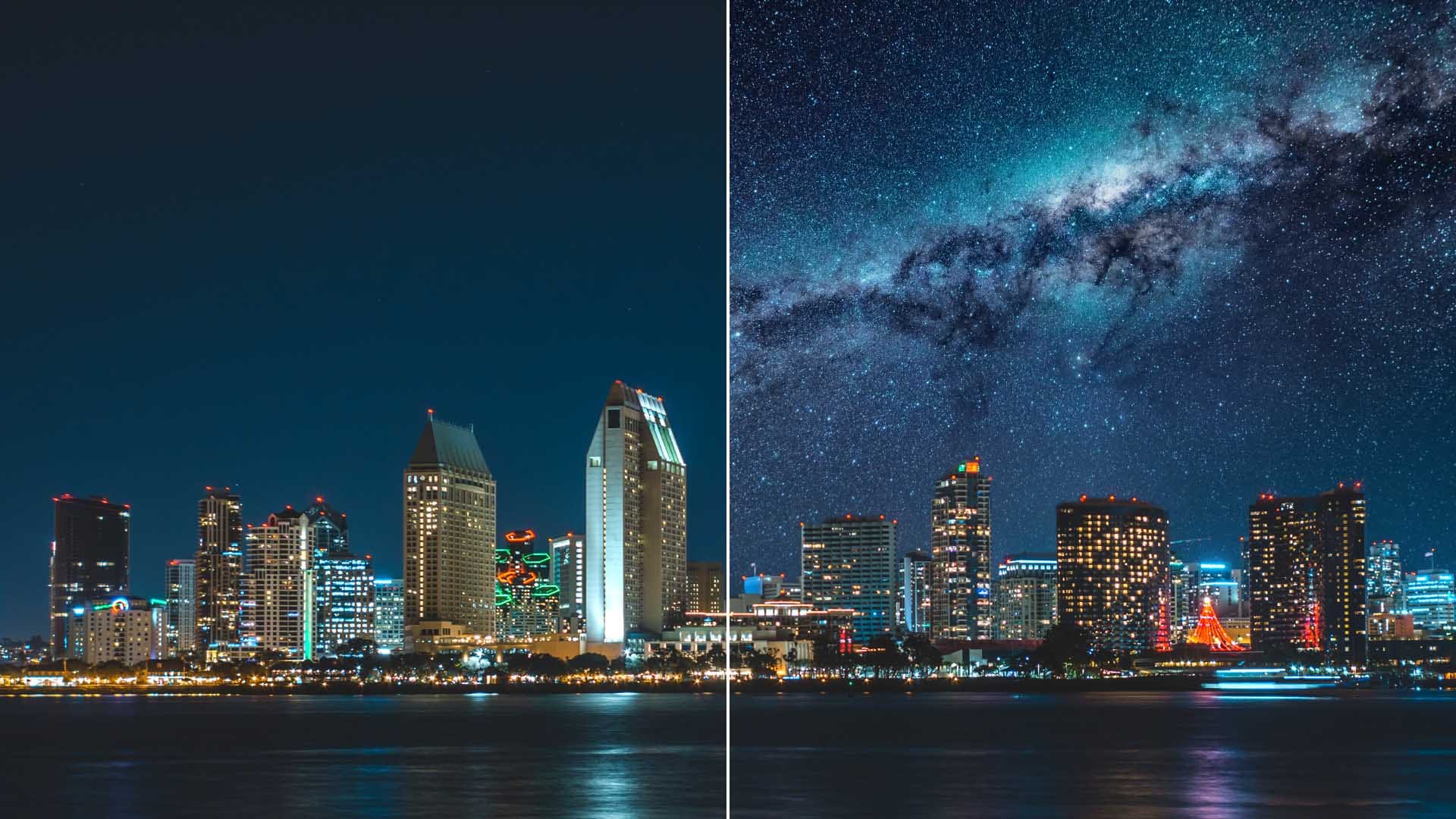
When the night disappears under the artificial glow, we don't just lose the stars: we lose sleep, biodiversity, and the ability to contemplate. An analysis of the invisible costs of light pollution.
Pedro Joaquin Villagra Delgado

International politics
«The Last Bullet for Democracy»: The Merz Government Faces State Elections
The CDU/CSU-SPD coalition under Chancellor Friedrich Merz, the most unpopular in recent history, confronts three decisive state elections in September 2026.
Lukas Effinger
Comments
No comments yet. Open the conversation.
Sign in to comment. Sign in