

Index
- What is the Catalan oasis?
- Historical examples of the Catalan oasis
- The birth of industrial Catalonia
- The particular case of the Catalan interwar period
- The Catalan oasis seen as the development of self-government
- Common characteristics of the Catalan oasis
- The Catalan oasis today
- The future of the oasis and the consequences of its past
International politics
The new Catalan oasis, or as the storm precedes calm
From sociological pujolismo to procés and its hangover: tour through the three great Catalan oasis of recent history and the new stage of institutional calm that opens in Catalonia after the lost decade.
https://conciencia-democratica.org/articulos/nuevo-oasis-catalan-tormenta-calma?lang=enBy Víctor-Xavier Bigorra LorenzoJuly 30, 202611 min read
In-depth reading
As in other known cases in the world, history in Catalonia is shown in a cyclical way, and we are now immersed in a new version of the old known "Catalan Oasis" whose effects and consequences are still to be seen.
Anyone who has completed his primary, secondary and post-compulsory studies under the Catalan education system or, failing that, has been interested in the history of Catalonia over the last 3 centuries, will be familiar with the concept of "Catalan Oasis". As its name indicates, an oasis refers to an isolated fertile area, in the middle of a desert, which, unlike its surroundings, possesses drinking water and therefore offers those who approach the possibility of survival. Despite the famous volcanoes of La Garrotxa and the arid lands of the Fangar del Delta de l'Ebre, Catalonia is not a land especially known for its desert areas, so we can rule out that direct meaning for the concept of the Catalan oasis.
What is the Catalan oasis?
The Catalan oasis, in the context of Catalonia's belonging to Spain, refers to a game of political contrasts between the activities of the second, often personalized and accumulated in the capital, and the activities, or lack thereof, of the first. Its significance has to do with the fact that, when Spanish politics becomes convulsed, incomprehensible or too accelerated, Catalonia stands as a haven of peace, as a discreet region of Iberian geography to which all this hustle does not seem to affect. Coloquially we could say that, in that scenario, Catalonia "goes to its own" without bothering. It is also understood as a context of economic progress for the Catalan region, although its implications are rather political.
Historical examples of the Catalan oasis
We could highlight three historical moments where these circumstances have occurred in recent history, with the forgiveness of the historians who read this and those who ask for understanding in the face of the historical simplifications that are to be given.
The birth of industrial Catalonia
During the 19th century, Catalonia began to become an industrialised region of Spain, specializing in cotton and in the promotion of its industry, as well as railways and labour rights (honorific mention requires the vagabond of the Canadenca of the next century). In parallel, Spain was immersed in a process of introspection, of searching for its political and social identity. A tournism that does not end up curing, a first attempt at chaotic republic, a hasty monarchic restoration. Although at the beginning of this century we are faced with the beginnings of cultural and political Catalanism, with Almirall's first works, we can also place here the beginnings of the concept of Catalan oasis.
The particular case of the Catalan interwar period
A second relevant case was found in 1936. After more than two years of conservative rule during the Second Republic that left facts like the Asturias revolution or the proclamation of the Catalan State, both in 1934, the liberation of the Catalan government and the victory of the Popular Front in the general elections of 1936 give rise to a final stage of the Second Republic at two speeds. While in Spain fascism prepared the breeding ground for what would be the national uprising and civil war, Catalonia, prior to the stage of street pistolerism between anarchists and communists, lived its first Catalan oasis. Journalist Manuel Brunet coined this term in La Veu Catalunya to describe the state of apparent understanding and social calm that prevailed in Catalujah in contrast to the Spanish political climate. True or not, ironic or not, and being more or less faithful to political reality, the Catalan oasis stood as the germ of the well-known "tarannà català": Catalan is a serious, hardworking person who goes to his own, who wants his region to progress economically and who puts the maintenance of social order as a priority.
The Catalan oasis seen as the development of self-government
Finally, we find the last great example of the Catalan oasis. During the 1980s, and after the restoration of the Generalitat de Catalunya as a political institution, in the midst of a proto-golpist climate fueled by the nostalgia of the barracks, the noise of the sabers and the operation Galaxia, which would later be sustained by the coup d'état of 23F, Catalonia lived its particular version of the Catalan oasis by the hand of sociological pujolismo and socialist political regroupment. It is in this context that the Catalan idea of dual voting also arises, that extension of the Catalan tarannà consisting in that the citizen votes at the different levels of administration according to their convenience, and not in a faithful and univocal way. And both concepts go together if we stick to the electoral results of that time.
The discreet victory of Jordi Pujol in the Catalan elections of 1980, with 27.83% of the votes, precedes more than two decades of convergent dominance in the Parliament of Catalonia, with successive victories of Convergència i Unió in the 1984, 1988, 1992 and 1995 elections without falling from 40% of the votes, the first three with an absolute majority. This period of stability gives rise to the so-called sociological pujolismo that, in its attempt to represent Catalonia exclusively, both inside and outside, manages to blend with the mentioned tarannà català and establish the idea of modern Catalan. The idea of a Catalan society that must live together in Spain for its own convenience, conditioning the governance of the state to its own interests, understanding that the two must hinder each other as little as possible, and that it materializes in Pujol by first supporting Felipe González in 1993 and then José María Aznar in 1996 in exchange for concessions for Catalonia. This Catalonia, which in 1987 coined the motto "som 6 milions", and which later became 8, laid the basis for what the modern idea of the concept of nation and state within the state, conceived as the development of self-government within the framework of the 1978 Constitution and always subordinated to national interests, could suppose.
However, the convergent formation that dominates comfortably in the Parliament during the 80s and 90s, hardly exceeds 32% in the elections to the Congress of Deputies, in which the PSC almost always exceeds the 35% barrier and contributes around twenty deputies to the Spanish socialists. Likewise, the pujolismo has difficulties to penetrate to the great cores of population in the municipal elections of Catalonia during those years. Apart from some control of Tarragona by Joan Miquel Nadal in the 1990s and the brief mandate of Manel Oronich in Lleida, the large provincial capitals are controlled for more than two decades by the socialists. Despite the great rural implementation of the convergents, which is worth obtaining great results in terms of councillors obtained, the distribution of the socialist vote plays against them, which it is these who dominate in the urban areas and in the large centres of population, surpassing the million votes in municipal elections for 20 years without interruption.
What we see, studying the electoral history of Catalonia, during the first 30 years from the transition to the 2010s, is a new version of this Catalan oasis based on democratic coexistence between institutions at different levels between convergents and socialists. A coexistence, often marked by the usual electoral and political tensions between the two groups, which implies the development of this autonomous state in the form of a well-built Catalan self-government, where it is the priority to value the institutions themselves in the face of state noise. A development that can be reflected in the degree of fiscal, legislative and political autonomy that Catalonia has, in contrast, often, with other regions of Spain.
Common characteristics of the Catalan oasis
If one thing they have in common these three periods of Catalan oasis in their history is that they are preceded by convulsive times. There is a previous underlying need to calm the political waters in the region, a self-knowledge that what is being done so far is not yielding results in the sense of national development, either for external causes or by own actions. There is, in a certain sense, a social and popular will to conduct and reconduce the situation, to vindicate a way of doing its own based on aspects that, a priori, might appear to be phrases made, regional topics and stereotypes but which, nevertheless, seek to define a way of doing it. The idea of the "català treballador", of the "feina ben feta", of the "bon govern", the fragile balance between "seny i la rauxa", the political ideology of the "peix al cove" and the economic ideas of "la pela és la pela". A set of ideas that, although sometimes they can project an image of Catalan as cheap, serious, moody or closed, contain a way of directing a society aimed at economic development, progress and welfare and social order as the ultimate end of good governance.
The Catalan oasis today
With all this, we can say that, on this occasion, it is the storm that precedes calm. And a logical deduction from this whole process is to ask ourselves at what point Catalan society is at this moment. Who humbly writes this article comes to the conclusion that, at present, the storm has been exemplified in the years of the Catalan independence procés, between 2012 and 2024. A time that, perhaps emulating Latin American nomenclature, has come to be called by some sectors like the lost decade of Catalonia. A time that has represented the opposite of what is supposed to be the tarannà català that we have described. A time in which the issues that until that moment had proved most important have been left aside, in which public debate has left out ideas as well as people. An era whose causes, development and consequences we will certainly have the opportunity to develop in future articles.
And as it is easily deductible in the light of the exhibition we have done so far, this storm has had to remain calm inexorably calm. If we had to take a piece of information to exemplify this transition, probably the best would be that of participation in the electoral processes of the Catalan elections from 1980 to 2024. While in the first 30 years electoral participation has an average of 59.81 per cent, it is triggered in the next 10 years to 73.93%, reaching 79.09% in 2017, figures that are not seen in the previous processes in any case. The relaxation until 51.29% of 2021, more consequence of the pandemic of the COVID than of any other political process, and the return to 55.31% of 2024 give us an image of this particular political electrocardiogram that indicates the return to the Catalan oasis.
The contrast is also evident in the choice of words. From the "ho tenim to touch" to the "Govern de tothom"; from the "played mestra" to the "seny"; from the "not a pas entangles" to the "uniting and serving". Also in the intensity of action and political currents. From years in which Catalonia shared the covers on the political current, to a more discreet appearance today; from governments and entities willing to make history, to a rather dull and boring political role; from a saturated period of epics and key dates, to a day-to-day management. It is undeniable that Catalonia has travelled from a sort of storm to a kind of Catalan oasis, in which the Catalan political debate has returned to the institutions and ideas that touched it, in which today it has gone on to devote itself to subjects that were previously in the background.
The future of the oasis and the consequences of its past
We live in a new stage of the Catalan oasis whose causes and future consequences will have to be carefully analyzed. I am sure we will have the opportunity to do so. Were the storm years justified? Did they give positive results? Is what we are currently experiencing a Catalan oasis or just a mirage? How long will it last? These are questions that we ask ourselves when they come about two years since we entered this new stage of our history.
It is possible that we are on our way to recover the much-desired tarannà català that we have so much proclaimed ourselves. Everyone is free to assess if this is so, what stage we have described, and we will continue to analyze, prefer, or if he thinks that we will get good results. But it is undeniable that Catalonia is in a new stage of its history in which it must assert its possibilities as a country (the way in which we go to our institutions). Only the passage of time will tell us if this is so or if, otherwise we will return to the storm.
So, and with this I leave you in peace, join us in this future review, both of the present and of the past, that we will make of the recent history of Catalonia, let us cross this desert together in search of the chances of survival that an eventual oasis can offer us. Do not forget your tarannà, and remember that in the middle of the desert, there does not always have to be an oasis.
Share
For Instagram: copy the link and paste it in your story or DM.
Continue with

International politics
We Have Been Warned
Global war is closer than we think.
Bernardo Gortaire Morejón
International politics
A SOCIETY TURNED OFF BY THE LIGHT
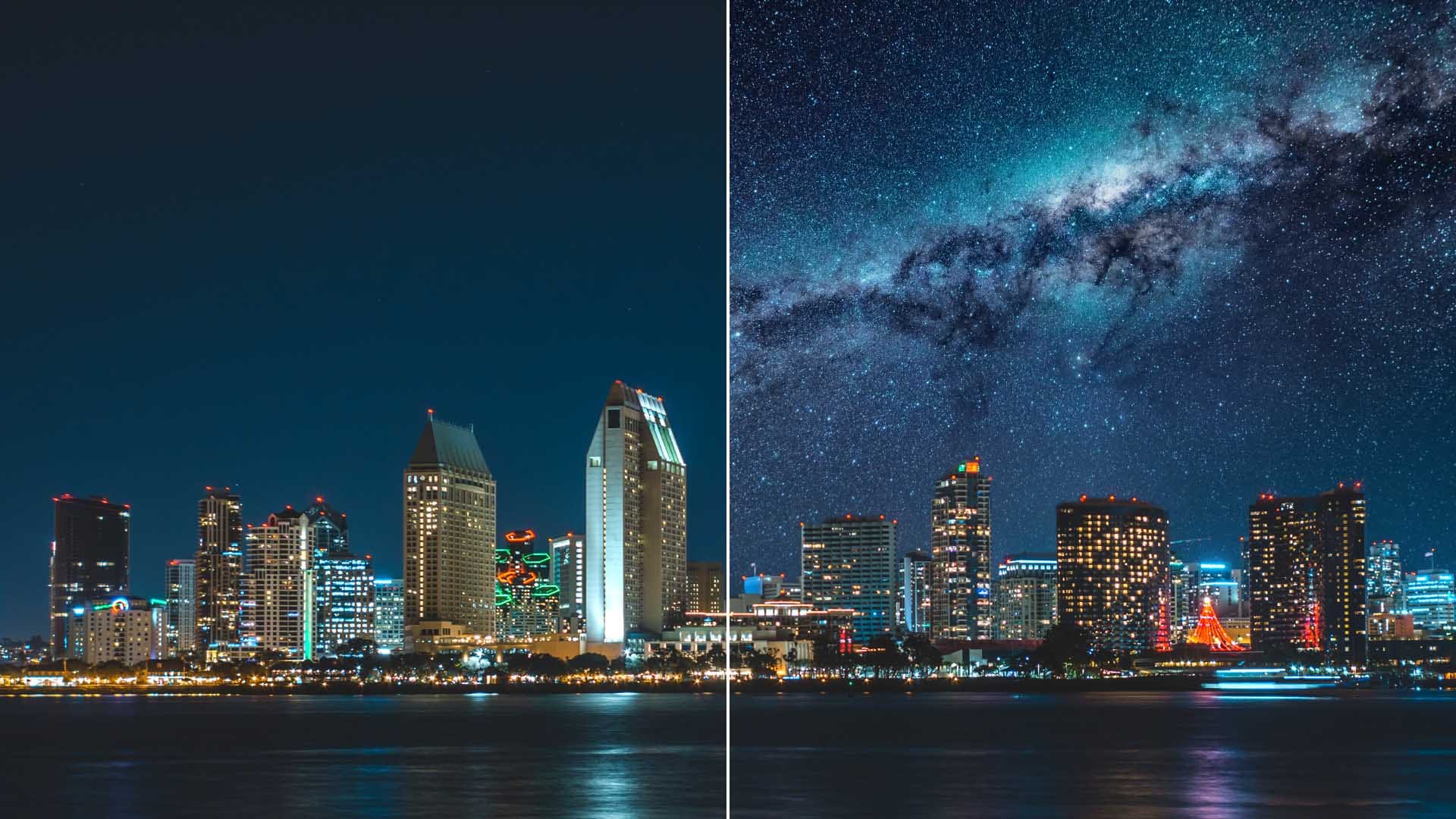
When the night disappears under the artificial glow, we don't just lose the stars: we lose sleep, biodiversity, and the ability to contemplate. An analysis of the invisible costs of light pollution.
Pedro Joaquin Villagra Delgado

International politics
«The Last Bullet for Democracy»: The Merz Government Faces State Elections
The CDU/CSU-SPD coalition under Chancellor Friedrich Merz, the most unpopular in recent history, confronts three decisive state elections in September 2026.
Lukas Effinger
Comments
No comments yet. Open the conversation.
Sign in to comment. Sign in